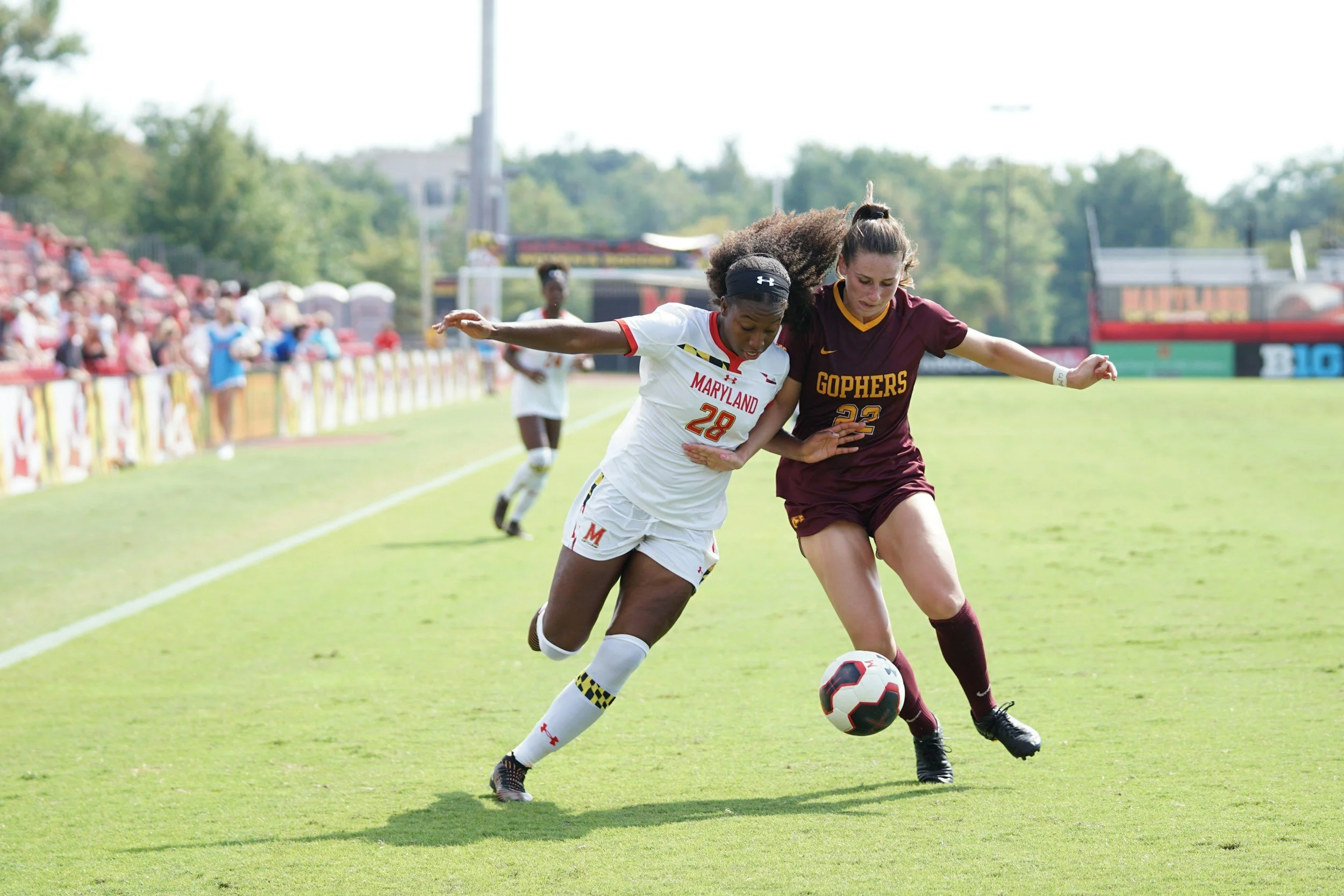
Two soccer players compete for possession of the ball while running
Athletes are often taught how to use their body, strength and technique, studying their opponents and to practice that repeatedly until they become automatic. But what happens when your emotions take over your body?
Have you ever made a mistake or an error out on the field or in a game that left your heart racing, and your mind worrying about what will go wrong again? Or overthinking how embarrassing it is or about the consequences after the game so much that it completely messes with your focus?
Or, when a game doesn’t go your way, does that follow you for the rest of the day, week, or month, to the point that it taints other aspects of your life?
Athletes are not immune to emotion, and the key is NOT shutting off your emotions so that you’re unaffected by these pitfalls.
Dialectical Behavior Therapy (DBT) offers practical skills that athletes can use before, during, and after competition to manage anxiety, frustration, disappointment, and other intense emotions.
Dialectical Behavior Therapy (DBT) can help atheletes;
Manage emotions more effectively
Tolerate the distress that competitions and losses can bring to their lives
Stay focused and present in the game
Reduce overthinking and worrying before, during and after a game or competition
Communicate more effectively with teammates, coaches, physical therapists and others involved in their sports world
How do you manage to stay calm and focused while experiencing INTENSE emotions at the same time?
Without limiting or erasing these emotions you can learn how to notice these experiences without reacting with judgement, regulate your emotions, and react in the way that you want to. We can do this by redirecting our attention and focus after tending to these emotions. These are all skills that a therapist can help you develop.
Why do athletes experience such intense emotions?
For many athletes, a game or a competition is not just an adjustment on a scoreboard. For some, what is on the table is; a scholarship, whether or not they will receive playtime, what the athlete thinks the outcome will mean about their identity, connections to future opportunities, and whether or not they will meet their family’s expectations or disappoint them.
Very quickly, an athlete can move from the thought “I made a wrong move/ play” to “I am a terrible player,” “I’ll never make the team,” or “everyone thinks i’m bad at this.”
Mindfulness (one of the core DBT skills you will learn in therapy) is the practice of coming back to the present moment, even in very difficult situations.
Just like a basketball player would practice their foul shots, or a baseball pitcher would practice pitching strikes- you will learn to practice the skill of bring your attention back to the present moment (a.k.a the game).
With Distress Tolerance Skills, you are not learning how to not make mistakes, but more how to prevent 1 mistake from turning into 5 mistakes, because you’re still focused on the first one.
One useful concept in DBT is the “STOP” skill
S — Stop.
Pause before immediately reacting.
T — Take a step back.
Give yourself a moment of psychological distance.
O — Observe.
Notice what you're thinking, feeling, and experiencing physically.
P — Proceed mindfully.
Choose what will help you in the situation rather than automatically acting on the emotion.
For an athlete, this all needs to happen within seconds because you don’t have 20 minutes to spare to process and dive into all these steps.
So, it might look like this;
you make a mistake
“shoot, i made a mistake”
your mind says “god, I’m terrible at defense”
You notice the thought and take an intentional breath
You identify the next task in front of you
And you go..
As you can see, the goal isn’t pretending the mistake never happened, but it’s to help the situation from getting worse if you’re ruminating and stuck in your head.
If you’d like to learn more, please reach out to work with one of our therapists who focuses on working with athletes. We see child, adolescent and adult athletes at Rose Wellness.
